According to data from the U.S. Department of Energy and the International Council on Clean Transportation (ICCT), in 2023, U.S. electric vehicle sales surpassed 1 million units for the first time, reaching 1.189 million vehicles, a more than 40% increase compared to 2022. By 2024, EVs are expected to account for 10% of the light-duty vehicle market, with an anticipated average annual growth rate of around 26%. This presents unprecedented opportunities for various businesses. If you are considering to install EV charger at business, you are at the forefront of the commercial future. This is not just about providing a convenient service; it’s about laying the foundation for your electric charging station business to attract new customers, enhance brand image, and achieve sustainable growth. This article will thoroughly analyze the commercial advantages of businesses installing EV charging stations, including their application in various scenarios such as hotels, shopping centers, and office areas. It will detail the entire process from planning and selection to permitting, construction, and operation, and comprehensively analyze initial costs, operating expenses, potential revenues, and government subsidies, helping you make informed investment decisions.
In today’s rapidly changing business environment, installing EV charging stations is a crucial step towards achieving differentiated competition and enhancing market position.
Installing EV charging stations at your commercial property directly attracts the growing demographic of electric vehicle owners. These drivers often have higher purchasing power and environmental awareness. By offering charging services, your business can:
Increase Foot Traffic: EV owners will prioritize businesses that offer charging options when looking for places to visit.
Extend Dwell Time: The charging process takes time, which means customers will spend more time at your location, increasing the likelihood of purchases.
Improve Employee Satisfaction: Providing convenient charging for employees is a significant benefit that helps attract and retain talent, while also boosting employee productivity and loyalty.
Electric vehicle charging stations play a unique role in various business scenarios, adding value for different types of enterprises. Understanding the different application scenarios will help you better plan your EV charging station design and choose the most suitable EV charging business models.
Installing charging stations at hotels and resorts is a crucial way to enhance guest satisfaction. EV owners will prioritize hotels that offer charging services when booking accommodation. This not only attracts environmentally conscious customers but also positions your hotel as a modern, service-oriented brand. Charging stations provide guests with a hassle-free charging experience or even free charging, significantly improving overall stay satisfaction.
For commercial parking lots and shopping malls, EV charging stations are powerful magnets for attracting foot traffic. Customers can charge their electric vehicles while they shop or dine. This not only extends their dwell time, increasing spending opportunities, but also adds extra service value to your commercial property. By offering convenient charging, you can encourage more EV owners to frequent your establishment.
Installing charging stations at workplaces is a significant benefit for employees. They can charge their vehicles during work hours, saving them time and effort. Furthermore, providing charging services demonstrates the company’s commitment to sustainability and environmental protection, enhancing its public image. This aligns with the modern trend of businesses actively fulfilling their corporate social responsibility.
Tourist attractions and transportation hubs are critical points for long-distance EV travel. Setting up charging stations in these areas effectively alleviates range anxiety for EV users and encourages more EV tourists. Whether visitors are enjoying an attraction or commuters are transferring at a hub, charging stations can provide the necessary range support, thereby promoting local tourism and economic development.
Multi-unit residential buildings have a limited amount of electrical capacity. Adding many EV chargers can strain this.
Who pays for the chargers and installation? This is a key question for any EV charging condo community.
Example Cost Breakdown (Illustrative – Per Charger in a Common Area Setup)
| Cost Component | Estimated Range (USD/CAD) | Notes |
|---|---|---|
| Level 2 Smart Charger | $700 – $2,500 | Varies by brand, features (e.g., power output, cable length) |
| Installation Labor | $1,000 – $5,000+ | Highly variable based on wiring distance, trenching, panel work |
| Electrical Materials | $300 – $1,500 | Wire, conduit, breakers, etc. |
| Permits & Inspection | $100 – $500 | Varies by municipality |
| Software/Network Fee | $10 – $30/month/charger | For smart features, billing (if applicable) |
| Potential Panel Upgrade | $2,000 – $15,000+ | If needed, shared across multiple chargers |
| Subtotal (Excl. Panel Upgrade) | $2,100 – $9,500+ | This is a wide range; site assessment is key. |
Parking is often a sensitive issue in condos.
Getting approval from the property management or HOA board and residents can take time.
How will residents pay for the electricity they use for condo ev charging?
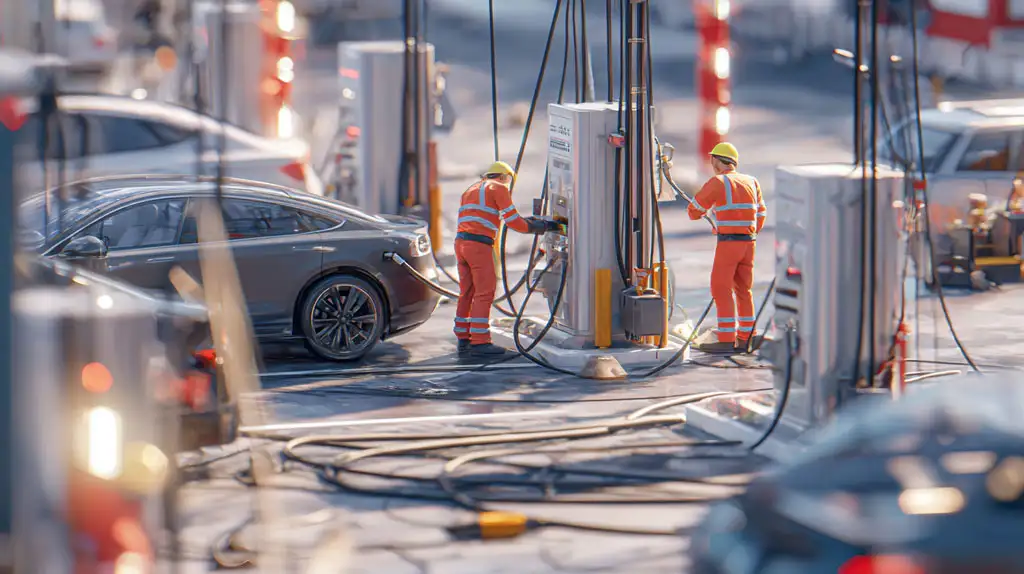
Installing an EV charger at my business might sound complex, but following clear steps can ensure a smooth and efficient process. Understanding how to have an EV charging station installed at business is crucial for successfully launching your charging operations.
Before installing any equipment, a comprehensive needs assessment is essential. You need to consider: How many EVs will visit daily? How many charging spots do you want to provide? Can your existing electrical infrastructure support the added charging load? The optimal installation location should allow easy EV access and be close to existing electrical lines. This helps in planning your EV charging station design and assessing installation difficulty.
The market offers various types of charging stations, primarily including Alternating Current (AC) chargers and Direct Current (DC) fast chargers. Understanding their respective characteristics and applicable scenarios is key to deciding what EV charging equipment to install at your business.
| Charger Type | Power Range | Charging Speed | Applicable Scenarios | Notes |
|---|---|---|---|---|
| AC Level 2 Charger | 3.7 KW – 22 KW | Medium (Hours To Full) | Offices, Hotels, Shopping Malls, Apartments | Most Common Type, Lower Cost, Flexible Installation |
| DC Fast Charger | 25 KW – 350+ KW | Fast (Tens Of Minutes To Full) | Transportation Hubs, Highway Service Areas, Large Commercial Zones | Higher Cost, High Power Grid Requirements, Fast Charging Speed |
Choosing the appropriate power level depends on your business needs and customer dwell time. For example, in locations with longer dwell times (like hotels), an AC Level 2 charger might be more economical and practical; whereas in locations requiring quick top-ups (like highway service areas), a DC fast charger is a better choice. To learn more about types of EV chargers, make a better choice.
Understanding NEMA Ratings
EV chargers have a NEMA (National Electrical Manufacturers Association) rating that indicates their resistance to environmental factors. Most home chargers are NEMA 3R or NEMA 4. A NEMA 4 rating, for instance, means it’s watertight and can withstand a direct blast from a hose.
Even though your garage is indoors, consider potential water sources. Is it near a hot water heater, a utility sink, or a spot where you wash your car? The National Fire Protection Association (NFPA) provides guidelines for safe installation. Placing your charger away from any potential spray or moisture will ensure its longevity and safety, regardless of its NEMA rating. It’s also important to understand how EV Charging Stations Work electrically to appreciate these safety ratings.
The ‘Great Debate’: Hardwired vs. Plug-In (NEMA 14-50)
Engineering Analysis: Hardwired vs. NEMA 14-50 While we manufacture both types of chargers, electrical engineering principles favor hardwiring for long-term safety, regardless of the brand you choose.
The “Weakest Link” Theory: Every connection point adds resistance. A NEMA setup adds four connection points (wire-to-outlet, outlet-to-plug) compared to hardwiring.
When you apply for a permit, you are inviting an expert to audit your home against the National Electrical Code (NEC). Specifically, they look at Article 625.
1. Circuit Rating & Overcurrent Protection (NEC 625.40 – 625.42)
48A x 1.25 = 60A. Therefore, a 60A breaker is the strict legal minimum. Using a 50A breaker for a 48A charger is a direct code violation.2. Disconnect Means (NEC 625.43 & Local Amendments)
The NEC Baseline: NEC 625.43 (2020/2023) requires a lockable disconnecting means visible within sight of the charger only if the equipment is rated at more than 60 Amps (or 150V to ground).
Critical Local Variance: Many local jurisdictions (AHJs) differ here. For example, some municipalities require a disconnect for ALL hardwired units, regardless of amperage. Others allow a “breaker lockout” device at the panel if the charger is not in sight. Action: Do not assume the 60A rule applies everywhere; verify with your local inspector.
The Financial Reality: Hidden Costs of Non-Compliance
Is saving $100 on a permit worth it? Let’s break down the economics.
Table: Detailed Cost Breakdown
| Item | Permitted Cost | Unpermitted Cost (Potential) |
|---|---|---|
| Permit Fee | $50 – $200 | $0 |
| Electrician Labor | $500 – $1,200 | $300 – $800 (Unlicensed) |
| Materials | $300 (Correct Wire) | $150 (Undersized) |
| Total Upfront | ~$1,000 – $1,700 | $450 – $950 |
| Insurance Risk | $0 | Full Denial of Fire Claim ($100k+) |
| Resale Penalty | Adds Home Value | $1,000+ (Buyer demands fix) |
| Safety Risk | Near Zero | High (Melting/Fire) |
The Insurance “Negligence” Clause: Most policies exclude damages resulting from “illegal acts” or “gross negligence.” Installing high-voltage equipment without the mandatory municipal permit can be classified as negligence, giving the insurer grounds to deny a claim—even if the fire started elsewhere but involved the electrical system.
Depending on the type and number of chargers you choose, existing electrical infrastructure may need upgrading. This could involve selecting between single-phase and three-phase power, which impacts whether transformer capacity needs to be increased, new cables laid, conduit runs, panel upgrades, circuit breaker amperages, etc. A professional installation team will be responsible for the installation, wiring, and commissioning of the charging equipment, ensuring safe and stable system operation.
Once installed, charging stations are typically integrated into a management system to enable remote monitoring, payment processing, and data reporting. You can choose different EV charging business models, such as free charging, time-based billing, or energy-based billing. Additionally, consider providing customer support and maintenance services to ensure the smooth operation of the charging stations.

| Item | Estimated Cost Range (USD) | Notes |
|---|---|---|
| AC Charger Equipment (Single Unit) | $500 – $6,000 | Brand, Power, Smart Features Affect Price |
| DC Fast Charger Equipment (Single Unit) | $10,000 – $100,000+ | Higher Power Means Higher Price |
| Installation Labor | $1,000 – $15,000+ | Depends On Complexity And Region, Excludes Civil Work |
| Electrical Upgrade/Construction | $5,000 – $50,000+ | Based On Existing Electrical Infrastructure And Required Capacity Increase |
| Permits And Design Fees | $500 – $5,000 | Local Government Regulations And Engineering Design |
How will customers and employees pay for the electricity? Choosing the right monetization model is key to your ROI.
Public Charging (Pay-As-You-Go): Integrated Credit Card Terminals or RFID cards are essential for retail and public locations. Drivers pay directly per kWh or per hour.
App-Based Payments: Smart chargers connect to OCPP platforms, allowing users to pay via mobile apps (Apple Pay/Google Pay) and track their charging history.
Employee/Fleet Authorization: For offices or fleets, you can issue RFID cards to authorized personnel for free or discounted charging, while charging visitors the full rate.
Flat Fee (Parking Integration): Some commercial parking lots prefer to bundle charging costs into a higher parking fee rather than metering electricity separately.
Transparency: Ensure the billing rate is clearly displayed on the screen or app to avoid customer disputes.
For your business to install EV charger at business is a smart move to align with the green travel trend and enhance corporate competitiveness. Whether you are a hotel, retailer, office building owner, or other commercial entity, a comprehensive EV charging solution will bring long-term value to you.
Linkpower has extensive experience in providing comprehensive electric charging station business solutions. From professional EV charging station design to equipment procurement, installation, operation, and maintenance, we offer one-stop service. We have in-depth knowledge of various EV charging business models and can provide you with the most suitable charging station cost optimization plan. Contact our expert team today for a free consultation!
Authoritative Sources
U.S. Department of Energy: https://www.energy.gov/eere/electricvehicles/ev-charging-basics
International Energy Agency (IEA) Global EV Outlook: https://www.iea.org/reports/global-ev-outlook-202X
Local Utility Company Website (e.g., Pacific Gas and Electric Company – PG&E): https://www.pge.com/
From initial consultation to seamless installation, our expert team delivers custom EV charging solutions tailored to your business needs.
We will send detailed technical info and quotation to you!