With the global focus on sustainable transportation and the explosive growth in EV sales, an unprecedented business opportunity is emerging: the Electric Vehicle Charging Business. According to data from the International Energy Agency (IEA), global EV sales surpassed 17 million in 2025, accounting for over 20% of new car sales worldwide. This is not just about selling electricity; it’s about building critical infrastructure for the future of green mobility.
Currently, there is a surging demand from consumers and businesses for reliable and convenient EV charging services. This means that whether you’re investing in public charging networks or providing dedicated charging solutions for commercial properties or fleets, there’s enormous market potential. This article aims to provide you with a comprehensive guide to understanding and navigating this dynamic industry. We will delve into every key aspect, from planning to operation, helping you seize the initiative in the thriving EV charging sector.

Electric vehicles are no longer a distant dream; they have become an indispensable part of our daily lives. This transformation is not just a technological revolution but also a strong signal of global progress towards sustainable development. The widespread adoption of electric vehicles is accelerating the energy transition, significantly reducing reliance on fossil fuels, and lowering urban air pollution. They are crucial tools for achieving carbon neutrality goals, holding profound significance for environmental protection. Against this backdrop, investing in and operating an electric charging station business is ushering in an unprecedented golden era.
Market Trends: Global EV sales continue to soar, with more consumers and businesses opting for electric mobility.
Charging Pain Points: As the number of EVs increases, the inadequacy of existing charging infrastructure becomes more apparent, creating vast opportunities for new charging stations.
User Expectations: Users demand more convenient and efficient charging experiences, driving innovation in charging technology and services.
Business Opportunity: The immense market demand means significant potential returns for entering the electric charging station business.
Government Incentives: Governments worldwide are introducing policies to support EV and charging infrastructure development, including subsidies, tax breaks, and streamlined approval processes.
Environmental Awareness: Increased environmental awareness among businesses and individuals is driving demand for green energy and sustainable business models.
Investment Hotspot: The EV charging sector has become a focal point for capital markets, attracting substantial investment.
Sustainable Development: Participating in the electric charging station business not only yields economic benefits but also contributes to environmental protection and social sustainability.”
Successfully operating an electric charging station business requires meticulous planning and efficient execution. Every step, from initial market analysis to selecting the appropriate business model, is crucial.
Before entering the EV charging sector, it’s crucial to define your business model. Each model has its unique advantages, disadvantages, and applicable scenarios. Choosing the right business model is the cornerstone of your success.
The owner-operator model means you will own and directly manage the charging station, participating in every step from site selection and installation to daily maintenance and billing. The advantages of this model include maximized profit margins, complete control over brand image, and user experience. The disadvantages are high initial investment, complex operational management, and relatively higher risks. In refined operations, you need to focus on every detail: how to optimize charging rates to attract users, how to leverage membership programs to enhance user loyalty, and how to use data analytics to optimize charging station utilization. For instance, when deploying charging stations in Commercial Parking Lots, you can offer differentiated pricing based on parking duration. For businesses, providing exclusive workplace EV charging services not only meets employee needs but also enhances corporate image. Successful owner-operation requires strong financial backing and a professional operational team.
Franchise and partnership models offer a relatively lower-risk entry point. You can join a mature charging network brand, leveraging its brand recognition, technical support, and operational experience. The advantages of this model include lower entry barriers, diversified risk, and rapid deployment. The disadvantage is profit sharing and less autonomy. In this model, risk control is paramount. You need to carefully review the franchise agreement terms, understanding details like revenue sharing, technical support, and brand usage. Simultaneously, evaluate the partner’s technical strength and market reputation to ensure they can provide continuous EV charging solutions for commercial properties support. Through partnerships, you can quickly scale your business and effectively use others’ experience to mitigate potential risks. For example, in locations like hotels or Shopping Malls, partnering with existing operators can enable faster service deployment.
Business Model | Pros | Cons | Applicable Scenarios |
|---|---|---|---|
Owner-Operator | High Profit, Strong Control | High Investment, High Risk | Sufficient Capital, Brand Focus, Long-Term Growth |
Franchise/Partnership | Low Barrier, Diversified Risk | Profit Sharing, Less Autonomy | Limited Capital, Rapid Expansion, Leveraging Existing Brands And Technology |
Managed Service | Stable Income, Easy Management | Lower Profit Margin | Asset Owners Seeking Stable Income Without Daily Operation Involvement |
Market Research: First, conduct in-depth market research in your target area to understand local EV penetration, charging habits, competitive landscape, and potential customer groups. This includes analyzing population density, traffic flow, and existing charging station distribution.
Business Plan: Develop a detailed business plan, including funding requirements, profit projections, operational strategies, and risk assessment. A clear plan is the cornerstone for attracting investors.
Site Selection Strategy: Choosing the right geographical location is critical. Ideal spots should have high visibility, convenient access, sufficient power supply, and potential for extended stays (e.g., shopping centers, parking lots).
Laws and Licenses: Understand and comply with local building codes, electrical regulations, ADA-mandated EV charging station Dimensions,and operating license requirements. Different regions may have varying rules; ensuring compliance is key to operation.
Fundraising: Evaluate the capital needed for startup and operations, exploring various financing channels such as government subsidies, bank loans, or venture capital.
To learn more about how to build your charging business from scratch, please consult our expert How To Start An Electric Vehicle Charging Business guide.
Time-Based Billing Model: Charges based on charging duration, suitable for locations where vehicles are parked for longer periods.
Energy-Based Billing Model: Charges based on the amount of electricity (kWh) consumed, which is the most common and fair model.
Subscription/Membership Model: Users pay a monthly or annual fee to enjoy more favorable charging rates or exclusive services.
Advertising Partnership Model: Generates revenue through advertisements on charging station screens or apps, suitable for high-traffic areas.
Value-Added Services Model: Combines charging with other businesses like convenience stores or cafes to offer integrated services and increase customer dwell time.
Energy Management Model: Partners with the grid to participate in demand response, optimizing electricity costs through smart charging management.
Want to explore the pros and cons of various revenue models? Click to view a detailed analysis of Electric Vehicle Charging Business Models.
Brand Advantage: Franchising with established electric vehicle charging franchise brands allows you to leverage their brand recognition, technical support, and operational experience, reducing entrepreneurial risk.
Technology and Training: Franchisors typically provide comprehensive technical training, equipment procurement support, and daily operational guidance.
Market Entry: You can enter the market faster, utilizing the franchisor’s existing customer base and marketing network.
Risks and Returns: Understand the investment costs, revenue-sharing models, and potential returns of franchising.
If you are considering entering the market through franchising, please read our special article on Electric Vehicle Charging Franchise.
Safety Standards: Comply with national and local mandatory standards for charging equipment installation, electrical safety, fire prevention, and more.
Grid Connection: Understand and meet the requirements and procedures of grid operators for connecting charging stations to the grid.
Metering and Billing: Ensure the accuracy of charging metering equipment and comply with consumer protection regulations related to billing.
Data Privacy: If user data is collected, comply with relevant data protection and privacy regulations.
Environmental Assessment: In some regions, large-scale charging station projects may require environmental impact assessments.
Government Subsidy Policies: Familiarize yourself with and apply for available government subsidies and incentive programs to reduce investment costs.
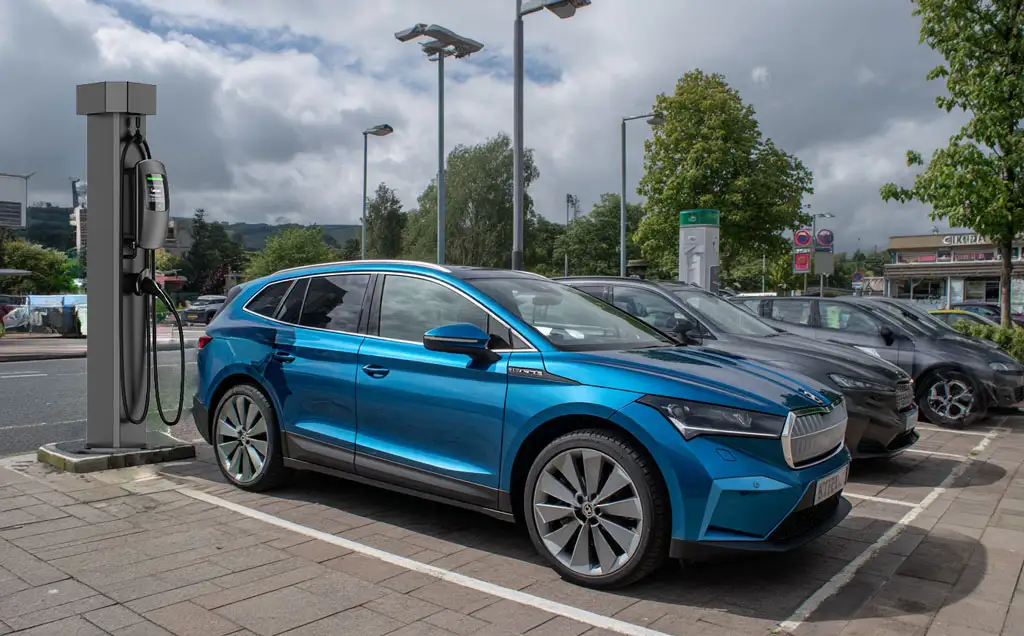
Selecting the right charging equipment is critical for successful construction. You need to understand different types of charging stations: Level 2 AC chargers (suitable for residential and workplace use) and DC fast chargers (suitable for commercial areas and long-distance travel). In EV charging station design, consider charging speed, connector types, durability, smart features, and scalability. When choosing EVSE, don’t just look at the price; also consider its technical specifications (e.g., power output, charging efficiency) and long-term operational reliability. Sometimes, investing in higher-quality, smarter equipment, though slightly more expensive upfront, can reduce maintenance costs and increase user satisfaction in the long run, thereby optimizing return on investment. Consider chargers with Modular Power Stack Design, which allow you to flexibly expand power output as needed.
Commercial EV Charging Station Connector Compatibility To ensure your charging station can serve as many electric vehicles as possible, understanding and supporting mainstream charger connector types is crucial:
J1772 (Type 1): This is the standard connector for Level 1 and Level 2 AC charging in the U.S. and Japan, supported by almost all non-Tesla EVs.
CCS (Combined Charging System): This is an extended version of the J1772 connector that supports DC fast charging (DCFC). It is widely used in North America and Europe and is the preferred standard for DC fast charging for many non-Tesla EVs.
NACS (North American Charging Standard) / Tesla Connector: Initially a proprietary Tesla connector, Tesla has announced opening its design to other automakers. More non-Tesla vehicles are starting to support NACS, which is expected to become a mainstream standard in North America in the future.
CHAdeMO: Primarily used by some Japanese EVs (e.g., Nissan Leaf), this is a DC fast charging standard, but its usage is declining in the North American market and may be replaced by CCS and NACS.
Charger Type | Power Range | Applicable Scenarios | Cost Consideration | Estimated Cost (Approx.) |
|---|---|---|---|---|
Level 1 | 2-5kW | Residential, Emergency Backup | Lowest | $0 – $300 / Unit |
Level 2 | 3.3-19kW | Residential, Workplace, Long-Term Parking | Medium | $500 – $6,000 / Unit |
DC Fast Charge | 50-350kW | Public Areas, Highway Service Stations | High, But High Revenue Potential | $20,000 – $150,000+ / Unit |
Enhancing construction efficiency is key to controlling charging station installation costs. Utilizing prefabrication and modular construction can significantly shorten the construction period. Partnering with experienced contractors who are familiar with the electric vehicle charging station installation process can effectively prevent unnecessary delays and additional expenses. In terms of cost control, beyond equipment procurement, you also need to consider the costs of electrical infrastructure upgrades. This includes main distribution panels (electrical panels), wiring, and potentially grid upgrade fees. These costs vary depending on the installation location, existing electrical facility conditions, and charger type.
Installation Detail | Cost Range (USD) | Description |
|---|---|---|
Basic Electrical Inspection | $100 – $300 | Assess existing electrical system capacity |
Panel Upgrade | $1,000 – $5,000+ | For insufficient capacity, may require replacement |
Wiring Installation | $200 – $2,000+ | Varies by distance and wiring difficulty |
Labor Costs | $500 – $3,000+ | Electrician installation and commissioning |
Permits & Inspection | $50 – $500 | Local government fees |
A successful electric charging station business relies on stable, efficient hardware equipment and intelligent software management systems.
Efficient operations are impossible without a powerful smart backend management system. It enables real-time monitoring of charging station status, charging sessions, energy consumption, and revenue data. Through these data insights, you can identify peak and off-peak periods, optimize pricing strategies, and predict maintenance needs.
Remote control functionality allows you to manage charging stations remotely, such as starting/stopping charging, adjusting power, and resolving user payment issues. A robust system also provides fault alerts, ensuring charging station reliability and uptime, which are cornerstones of enhancing user satisfaction and maintaining a high Charging Network Service Quality.
Payment Method Diversity:
Card Payment: Via credit cards, debit cards, or prepaid cards.
Mobile App Payment: The most popular payment method, integrating charging status queries, reservations, and navigation functions.
QR Code Payment: Convenient scan-to-pay, no additional hardware needed.
RFID Card: For identification and payment by members or specific user groups.
Billing Transparency: Ensure the billing system is accurate, fair, and transparent to build user trust.
Backend Management: The payment system needs to be seamlessly integrated with the charging management platform for easy data analysis, revenue settlement, and fault diagnosis.
To delve deeper into various payment technologies and their integration solutions, please click on EV Charger with Payment System.
Site Assessment: Professionals will evaluate the site’s existing power capacity, wiring conditions, and installation location to ensure safety and compliance.
Selecting the Right Charger: Choose AC charging piles (Level 2) or DC fast charging piles (DC Fast Charger) based on expected usage frequency and charging speed requirements.
Power Upgrades: Some commercial sites may require electrical system upgrades to meet high-power charging demands.
Construction and Installation: Installation must be carried out by certified electricians and professional teams to ensure compliance with all electrical codes and safety standards.
Network Connectivity: Ensure the charging piles have a stable network connection for remote management, data transfer, and payment processing.
For detailed installation steps and considerations, please refer to our How to Install EV Charger at Business guide.
The electric charging station business is a rapidly evolving industry. Keeping up with the latest trends and continuously innovating is key to ensuring long-term success.
The policy and regulatory evolution in the EV charging sector is accelerating. Governments worldwide are continuously adjusting subsidy policies and establishing new charging standards and safety regulations. Closely monitoring these changes is vital, as they can impact your investment decisions and operational models.
You need to continuously assess competitors’ strategies and identify your competitive advantages, such as offering unique value-added services or focusing on niche markets. For example, introducing subscription services or integrating advertising screen business on charging stations are highly promising revenue channels.
Smart Charging:Future charging networks will be more intelligent, capable of automatically adjusting charging strategies based on grid load, electricity price fluctuations, and user demand.
V2G (Vehicle-to-Grid) Technology:EVs can not only draw power from the grid but also feed excess power back into it, becoming mobile energy storage units, bringing new business models to charging stations.
Renewable Energy Integration:Combine charging stations with renewable energy sources like solar and wind power to achieve more environmentally friendly and economical charging operations.
Convenient Application of ISO 15118 in EV Chargers: The ISO 15118 protocol is key to enabling ‘Plug & Charge’ functionality. Users simply plug their electric vehicle into the charging station, and authentication and billing occur automatically, without the need for cards or apps, greatly enhancing charging convenience and user experience.
Integration of Energy Storage Systems (ESS): Deploying energy storage systems at charging stations can effectively alleviate grid pressure, especially during peak charging hours. ESS can release stored energy, reducing the operational costs of the charging station. Furthermore, it can serve as a backup power source, enhancing the reliability of charging services.
Impact of Emerging Battery Technologies (e.g., Solid-State Batteries): The large-scale commercialization of emerging battery technologies like solid-state batteries will lead to significant improvements in EV range and faster charging speeds. This will directly influence charging station traffic patterns and may drive demand for higher power and smarter charging infrastructure.
User Experience First:Providing a seamless charging experience, efficient customer service, and timely technical support is crucial for customer retention.
Community Building:Build a loyal user community through online platforms and offline activities to enhance brand loyalty.
Data-Driven:Utilize charging data to analyze user behavior and preferences, continuously optimize services, and enable personalized marketing.
The success of an electric charging station business largely depends on its ability to meet diverse customer needs and deployment scenarios. Different locations and user groups have varying expectations for charging services.
Application Scenarios: Shopping malls, office buildings, hotels, apartment complexes, hospitals, and retail stores, etc. EV Charging for Property Developers is a critical consideration for new construction and asset modernization.Customer Value: Provide convenient charging services for visitors, employees, and residents, enhancing property attractiveness and competitiveness. Installation Considerations: Assess existing power capacity, select appropriate charger types (L2 AC charging or DC fast charging), and plan for reasonable layout. Management System: Deploy intelligent charging management systems to enable remote monitoring, billing, reservations, and load management. Value-Added Services: Combine charging with other businesses like convenience stores, cafes, etc., to create a more comprehensive user experience. To learn more about providing charging services for your commercial property, please visit our Commercial Property EV Charging Solutions page.
Typical Users: Logistics companies, taxi companies, public transport operators, corporate commuter fleets, etc. Core Needs: Ensure fleet vehicles are fully charged during operational hours, maximize vehicle utilization, and reduce charging costs. Smart Charging: Utilize smart charging scheduling systems to charge during off-peak hours, benefit from lower electricity rates, and optimize fleet charging processes. Infrastructure: Often requires building high-capacity charging infrastructure in depots or centralized parking areas, potentially necessitating dedicated transformers. Data Analysis: Optimize fleet routes, charging strategies, and energy consumption through charging data analysis. For information on optimizing fleet charging, please refer to our Fleet Management EV Charging Solutions guide.
Service Model: Provide on-demand mobile charging, roadside assistance charging, and emergency charging for large events via mobile EV charging trucks. Key Advantages: High flexibility, able to cover areas difficult for fixed charging stations to reach, addressing users’ “range anxiety.” Technical Characteristics: Typically equipped with large-capacity battery packs and DC fast charging equipment, capable of quickly replenishing vehicle power. Business Potential: Offers high-value, immediate services in city centers, tourist attractions, or during emergencies. To learn more about this innovative service model, please refer to our dedicated article on Mobile EV Charging Truck.
In the increasingly competitive EV charging market, choosing a reliable and experienced partner is crucial. Linkpower, as an industry leader, is dedicated to providing comprehensive commercial electric vehicle charging solutions, helping business clients confidently navigate challenges and seize market opportunities.
Linkpower’s advantages include:
Customized Solutions: Whether for retail establishments, office parks, hotels, multi-unit dwellings (MUDs), or large fleets, Linkpower can provide tailored charging infrastructure planning, design, and implementation solutions based on your specific needs and site characteristics.
Cutting-Edge Technology Integration: Linkpower’s charging station products and management platform integrate the latest smart charging technologies, including efficient DC fast chargers, intelligent load management systems, and advanced hardware supporting future V2G and Bidirectional charging functionalities.
Streamlined Deployment & Operations: From initial feasibility analysis and support for EV charging grants applications, to professional installation (including complex electrical panel upgrades and wiring), and finally to smart backend management and 24/7 customer service, Linkpower offers end-to-end, one-stop services.
Superior User Experience: We understand that user satisfaction is key to business success. Linkpower’s solutions prioritize user-friendliness, offering intuitive App integration, multiple convenient payment options, and ensuring EV Charging Interoperability, allowing all EV owners to charge without hassle.
Continuous Innovation & Support: The electric vehicle industry is rapidly evolving, and Linkpower closely follows technological advancements and policy changes. We not only provide high-quality products but also offer long-term technical support and system upgrade services.
Embark on Your Electrified Future: If you are considering investing in a commercial electric vehicle charging business or seeking solutions to enhance existing charging infrastructure, Linkpower is your trusted partner. We possess the expertise and extensive experience to provide a comprehensive list of commercial electric vehicle solutions that cover all your needs.
1. How much capital is needed to invest in an EV charging business?
This depends on the business model you choose. If you opt to fully own and operate a charging station (Owner-Operator), the initial investment is higher, potentially ranging from $20,000 to $150,000+ (depending on the type of charger, such as L2 or DC fast charging). If you choose a franchise or partnership model, the initial investment is relatively lower, but you may need to share profits. The article’s “EV Charger Cost Table” provides detailed estimates.
2. What is the best location for a commercial EV charger?
The ideal installation location should have high visibility, convenient access, and allow vehicles to stay for an extended period. For instance, large shopping malls, office buildings, hotels, apartment complexes, and logistics fleet parking lots are all excellent choices. You need to conduct in-depth market research and big data analysis to maximize the utilization rate of the charging stations for sustained revenue.
3. How do I choose the right type of EV charger for my business?
Choosing the right charger type requires considering charging speed and use case. For example, locations with longer parking times like hotels and offices are suitable for L2 AC chargers, while highway service areas and public parking lots need faster DC fast chargers. The article’s “EV Charger Type Comparison Table” provides detailed references to help you balance technical specifications and cost-effectiveness.
4. What subsidies and policy support does the government offer for the EV charging business?
Governments worldwide are actively promoting the construction of EV infrastructure. In the U.S., you can apply for funding and tax credits provided by the federal National Electric Vehicle Infrastructure (NEVI) Formula Program and the Inflation Reduction Act (IRA). Additionally, many states, local governments, and even utility companies offer extra subsidies and incentives.
5. How can I generate profit from EV chargers?
Beyond basic charging fees, you can increase revenue in various ways. For instance, you can use advertising partnerships to display ads on charger screens, offer subscription/membership services to boost user loyalty, or provide value-added services like car washes or convenience stores at the charging station. Future V2G technology may also allow you to earn extra income by supplying power back to the grid.
Authoritative Sources
U.S. Department of Energy – Alternative Fuels Data Center: Charging Infrastructure
International Energy Agency (IEA) – Global EV Outlook Reports
National Renewable Energy Laboratory (NREL) – EV Charging Research
Electric Vehicle Supply Equipment (EVSE) Standards
Electrify America – News & Insights
Charging Interface Initiative (CharIN) – About Us
International Council on Clean Transportation (ICCT) – Publications on EV Charging
International Energy Agency (IEA):
BloombergNEF:
U.S. Department of Energy:
International Organization for Standardization (ISO):
Leading Industry Companies/Associations:
From initial consultation to seamless installation, our expert team delivers custom EV charging solutions tailored to your business needs.
We will send detailed technical info and quotation to you!