Don’t fall into the 40% trap. Statistics show that 40% of initial EV projects require costly rework due to poor scalability planning. Stop prioritizing hardware procurement in isolation—start planning for the long-term ecosystem today.
Here is the solution. Our guide outlines 7 actionable steps to deploy a robust infrastructure:
Think in Phases: Plan for growth stages, not just a one-off project.
Select Scalable Hardware: Choose chargers that support load management and expansion.
Implement Smart Software: Use intelligent tools for load balancing and operations.
Master Your TCO: Look beyond sticker price to control long-term operational costs.
Hunt for Incentives: Leverage rebates to offset your capital investment.
Learn from Real-World Examples: See how others solved power constraints without grid upgrades.
Future-Proof Your Investment: Explore V2G technology to turn chargers into assets.
The Bottom Line: Follow these steps to transform your charging infrastructure from a sunk cost into a strategic asset.
Adopt a strategic, phased approach for true scalability. This method protects your budget and mitigates operational risks.
Goal: Gain critical insights with minimal risk.
Action: Begin with reliable, cost-effective Level 2 chargers. Meticulously track vehicle routes, driver behavior, and energy consumption. This initial data collection is invaluable for future planning.
Goal: Optimize operations and rigorously control evolving costs.
Action: Implement smart software to intelligently manage power distribution. This prevents peak demand spikes and significantly lowers costs.
Goal: Achieve maximum operational efficiency and unlock new revenue streams.
Action: Integrate advanced energy management systems. Adopt Vehicle-to-Grid (V2G) technology technology to monetize stored energy. Result: This transforms your fleet from a cost center into a revenue-generating asset.
Your hardware is the backbone of your fleet’s operation. Don’t just focus on plug compatibility.
Prioritize Load Management: This distributes power intelligently during peak times to prevent overloads.
Ensure Seamless Expansion: This allows you to add units without major infrastructure overhauls.
Example: With the right hardware, you can double your charger count without upgrading your main electrical panel.
These chargers are ideal for fleet vehicles that have extended dwell times, such as overnight parking. They offer a highly cost-effective and straightforward installation process.
Best for: Depot charging, vehicles with long park times, employee workplace charging.
Charging Speed: Delivers approximately 20-30 miles of range per hour.
Cost Efficiency: Features lower upfront hardware and installation expenditures.
Designed for fleets requiring rapid vehicle turnaround, DCFCs are a more significant investment but deliver substantially faster charging times, getting a vehicle back into service in under an hour.
Best for: High-utilization fleets, public charging integration, or opportunity charging during short breaks.
Charging Speed: Provides 100-200+ miles of range in just 30 minutes.
Investment & Power: Entails higher upfront costs and necessitates more robust power infrastructure from the electrical grid.
For a clearer comparison, here’s a breakdown of features for scalable fleet EV charging hardware:
| Feature | Level 2 (AC) Charging | DC Fast Charging (DCFC) |
|---|---|---|
| Best Use Case | Overnight depot charging | Quick turnaround, on-route charging |
| Charging Speed | Slower (4-8 hours for full charge) | Very Fast (30-60 mins for 80% charge) |
| Upfront Cost | Low to Moderate | High to Very High |
| Site Impact | Lower electrical needs | Significant electrical upgrade often needed |
| Ideal Fleet | Last-mile delivery, service vans | Taxis, regional haul, public transit |
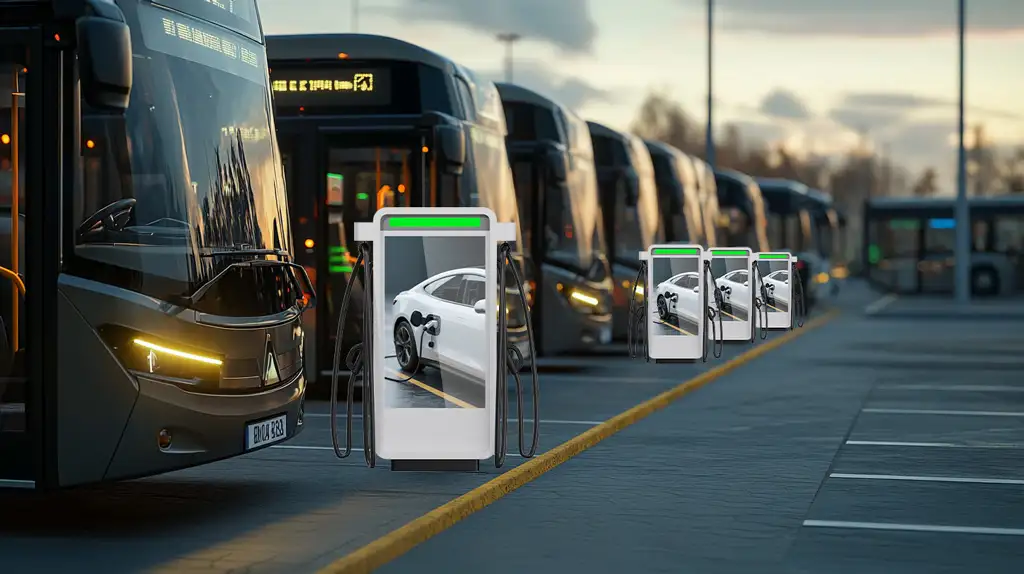
Your Charging Station Management Software (CSMS) acts as the “intelligent brain” of your operation. It replaces guesswork with precise control.
Load Balancing: Dynamically distributes power to prevent grid overloads as you add more chargers.
OCPP Compatibility: Ensures you are never locked into a single hardware vendor.
Alerts & Scheduling: Real-time monitoring optimizes charging windows and detects issues instantly.
The Result: Without this smart management, scaling your hardware will inevitably overload your grid.
When evaluating a CSMS for your fleet’s scalable charging needs, prioritize features that deliver:
1. Smart Charging & Load Balancing
Smart Charging: Optimizes charging speeds in real-time.
Load Balancing: Distributes available power dynamically to ensure you never exceed facility limits.
Demand Charges: actively manages usage to avoid these costly peak-power fees.
Benefit: Guarantees fully charged vehicles without requiring multi-million dollar grid upgrades.
2. Open Charge Point Protocol (OCPP) Definition: OCPP is the industry standard that safeguards you against vendor lock-in. It ensures interoperability between different hardware and software.
Compatibility: Seamlessly mix and match hardware from diverse manufacturers.
Cost Control: Freedom to shop for more economical or faster chargers in the future.
Future-Proofing: Grants you complete control over your long-term technology roadmap.
3. Telematics Integration Do not let your data exist in silos. Seamlessly integrate with platforms like Geotab or Samsara to visualize real-time State-of-Charge (SoC), location (GPS), and battery health.
Smarter Dispatch: Make informed decisions on vehicle deployment.
Proactive Maintenance: Identify battery health issues before they cause downtime.
Route Optimization: Plan routes based on precise energy data.
4. Driver Access & Payment
Access: Control who charges and when via RFID (Radio Frequency Identification) cards or mobile apps.
Billing: Track granular energy usage per driver or vehicle for internal accounting.
Reimbursement: Automate processes for employees charging fleet vehicles at their residences.
Don’t be fooled by a low sticker price. A cheap charger can become a financial drain if you ignore the long-term costs. Follow this 4-step checklist to calculate the real price:
Collect Capital Costs: Sum up all upfront expenses, including hardware, installation, and site preparation.
Estimate Energy Fees: Project your monthly electricity rates and identify potential peak demand charges.
Plan for Maintenance: Budget for ongoing repairs and annual network subscriptions to ensure uptime.
Factor in Software Savings: Account for the operational cost reductions achieved through smart load management.
Your fleet’s EV charging TCO encompasses:
Charger Hardware Procurement
Installation & Site Preparation Work
Any Necessary Utility Service Upgrades
Electricity Costs (often your most substantial and variable expense)
Charging Station Management Software (CSMS) Subscription Fees
Ongoing Maintenance and Repair Plans
Don’t fly blind. Look beyond the sticker price. Here is how your real expenses break down, with a special warning on Demand Charges—the hidden killer of ROI.
| Cost Component | What to Watch For | Impact on TCO |
| Hardware & Install | Upfront costs. | One-time expense. |
| Networking Fees | Monthly data connectivity. | Fixed recurring cost. |
| Energy Usage | The electricity you actually use (kWh). | Variable recurring cost. |
| Demand Charges | The Danger Zone: Fees based on your highest power spike. | Critical: Can double your bill if unmanaged. |
Example Scenario:
Unmanaged Charging: A sudden spike hits 100kW at peak time → $2,000/month in demand fees.
Smart Managed Charging: Software smooths the load to 50kW → $1,000/month in fees.
Result: Smart software saves you $12,000 annually.
Rigorous analysis isn’t just about costs; it’s about validating the financial wins.
Fuel Savings: Electricity is generally cheaper and more stable than diesel or gasoline.
Reduced Maintenance: EVs have fewer moving parts, dramatically lowering repair bills.
Operational Efficiency: “Refueling” happens while vehicles sleep, eliminating downtime at gas stations.
Conclusion: A detailed TCO analysis is the only way to distinguish a cheap charger from a cost-effective solution. Action: Weigh these long-term operational savings against upfront costs to choose the right scalable infrastructure.
The Golden Rule: Never pay full price. Governments and utilities offer substantial funds to offset your investment. Target these three tiers of funding:
1. Federal Tax Credits (The Big Picture)
Commercial Clean Vehicle Credit: Offsets the cost of purchasing the EVs themselves.
Alternative Fuel Vehicle Refueling Property Credit: Covers a substantial portion of your charging equipment and installation costs.
Search Entry: Consult the official IRS guidelines for current eligibility.
2. State & Provincial Programs (Regional Support)
Target: Specific regions like California (CALEVIP) or Quebec offer generous rebates.
Scope: Unlike federal credits, these often provide direct cash grants for procurement and installation.
3. Local Utility Rebates (The Hidden Gem) Your local utility is often your biggest partner.
Action 1 (Query): Contact them before you buy.
Action 2 (Apply): Ensure you select “intelligent, grid-friendly” chargers. Utilities pay you to help them manage the grid.
Actionable Insight: Find Your Funds Now Stop guessing. Use these official databases to find programs tailored to your specific zip code:
To demonstrate the value of a strategic strategy, let’s examine a common logistics scenario. This real-world example highlights how to transition from a pilot project to a fully scalable EV charging infrastructure without breaking the bank.
Phase 1 (10 Vans): Operations ran smoothly with basic, unmanaged chargers.
Phase 2 (30 Vans): As the fleet tripled, unmanaged charging triggered exorbitant demand charges. The depot’s power capacity was consistently exceeded, leaving vehicles uncharged overnight.
The Solution (Smart Management): Instead of an expensive grid upgrade, the company implemented an intelligent approach:
Deploy CSMS: Integrated robust Charging Station Management Software.
Dynamic Load Balancing: Automatically distributed available power across all 30 chargers in real-time.
Result: Avoided costly construction while maximizing existing grid capacity.
The Transformative Result: By building a truly scalable EV charging system, the fleet achieved:
Scale: Successfully charges 50+ vehicles nightly (up from 10).
Savings: Reduced electricity cost per mile by 40%.
Future-Proof: The system is now the standard model for their nationwide operations.

To build a sustainable scalable EV charging infrastructure for fleets, stop viewing chargers merely as a cost center. By leveraging Vehicle-to-Grid (V2G) technology and peak-valley optimization, your infrastructure can evolve into a revenue-generating asset.
What is V2G?
It follows a simple flow: Idle Vehicles → Feed Energy to Grid → Earn Compensation. To prepare for this, your infrastructure needs two prerequisites:
Bi-directional Hardware: Chargers capable of sending power back to the grid.
Smart Software: A system to manage energy trading and utility communication.
While V2G adoption is still growing, it unlocks future “Fleet-as-a-Service” revenue streams. Strategic Tip: Even if you don’t use it today, choose V2G-ready hardware now. This ensures your scalable EV charging infrastructure is ready for tomorrow’s opportunities without expensive equipment replacement.
Typical Timeline: 3–6 Months A structured approach prevents delays in your scalable EV charging infrastructure project:
Month 1: Consultation & Site Assessment.
Month 2-4: Utility Service Upgrades & Permitting.
Month 5-6: Installation, Commissioning & Testing.
Pro Tip: Utility upgrades often cause the biggest delays. Start conversations with your utility provider immediately to keep your timeline on track.
The biggest financial risk is Demand Charges (fees for sudden power spikes). Without management, plugging in all vehicles at once triggers these penalty rates. The solution is simple:
Smart Software: Automatically staggers charging sessions.
Result: Flattens your power usage curve to keep bills low.
Absolutely not. We strictly follow the OCPP (Open Charge Point Protocol) standard. A truly scalable EV charging infrastructure requires flexibility:
Freedom: Mix and match charger brands as you grow.
No Lock-in: You are never tied to a single hardware vendor.
Limited space shouldn’t stop you. We maximize small footprints using compact designs:
Wall-Mounted Units: Save floor space entirely.
Overhead Reels: Keep cables off the ground for safety.
Dual-Port Pedestals: Charge two vehicles from one spot.
We ensure maximum uptime for your charging infrastructure with comprehensive support plans backed by clear Service Level Agreements (SLAs). Our services include:
Proactive Monitoring: Identifying potential issues before they impact operations.
24/7 Remote Support: Round-the-clock technical assistance for software and hardware.
Certified On-Site Service: Expert technicians dispatched quickly for physical repairs.
Building a scalable EV charging infrastructure is a strategic investment, not just a hardware purchase. By following these steps, you move beyond basic charger acquisition to forge a smart energy ecosystem. This approach secures three key long-term benefits for your fleet:
Scalability: Seamlessly expand your network as your fleet grows without costly rework.
Reliability: Ensure maximum vehicle uptime with a resilient, managed system.
Cost Reduction: Minimize operational expenses through smart energy management and future-proofing.
1. Assess Your Fleet Requirements Before buying hardware, answer these three questions using your existing data:
Daily Mileage: What is the maximum range required per shift? (Source: Daily Trip Logs)
Typical Routes: Do vehicles return to the depot mid-shift? (Source: GPS/Telematics Data)
Dwell Times: How many hours do vehicles sit idle? (Source: Shift Schedules)
2. Coordinate with Your Utility Provider Contact your local utility early to secure the following outputs:
Rate Structure: Confirm Time-of-Use (TOU) rates to plan low-cost charging windows.
Peak Demand Limits: Identify power thresholds to avoid expensive demand charges.
Incentives: List available rebates for installing scalable EV charging infrastructure.
3. Request a Specialized Consultation Connect with a Linkpower expert today to simulate your site’s power load. We will help you select the right mix of hardware and software.
Benefit: Receive a roadmap that prevents costly future upgrades.
Benefit: Ensure your system is compatible with future EV fleet expansions.
Authoritative source:
We will send detailed technical info and quotation to you!