Electric Vehicle (EV) Plug and Charge technology, based on the ISO 15118 standard, aims to revolutionize the charging experience. It allows EVs to automatically identify, authorize, and begin charging upon plugging into a station, eliminating the need for extra steps. This seamless convenience is crucial for EV adoption. However, realizing this vision faces multiple challenges. The industry confronts various hurdles, including complex cybersecurity protocols, interoperability barriers, high infrastructure upgrade costs, market fragmentation, and stringent regulatory compliance requirements.
To address these, the industry is actively pursuing standardization and rigorous testing for interoperability; building robust cybersecurity architectures with optimized PKI management; implementing cost-effective, phased infrastructure upgrade strategies; fostering close collaboration among market players (like OEMs, CPOs); and proactively establishing comprehensive regulatory compliance frameworks. This article will directly address these core challenges. We will also propose practical solutions. Our goal is to help build a truly intelligent, secure, and seamless EV charging ecosystem.
The ISO 15118 standard complexity stems from defining the precise communication sequence and digital signatures required for the PnC process. Interoperability frequently fails at the initial handshake, specifically during the Session SetupReq/Res and the subsequent Certificate Installation phases. Manufacturers often misinterpret ISO 15118-2 Section 8.3 (Service Discovery) or ISO 15118-20 Annex E (Certificate Handling), leading to incompatible X.509 certificate chains or incorrect handling of the Payment Option request messages.
Industry participants must collaborate to ensure all equipment complies with the latest version of ISO 15118, promoting seamless communication between different systems. Practical experience dictates that interoperability validation must penetrate the protocol stack, learning from CharIN Testivals and internal OEM/CPO integration project failures.
ServiceDetail message exchange, or improper handling of TLS handshake termination. Our most practical recommendation is to utilize a pre-validated reference stack (e.g., from a certified vendor) for the V2G communication controller to minimize divergence from the official protocol specifications.Table 1: ISO 15118 Versions and Their Key Focus Areas
| ISO 15118 Version | Key Focus Areas | Plug & Charge Related Features |
| ISO 15118-2 | Basic communication protocol, AC/DC charging, V2G | First introduction of Plug & Charge concept, PKI-based authentication |
| ISO 15118-20 | Extended functionalities, wireless charging, bidirectional charging, higher power, crypto agility | Enhanced Plug & Charge security mechanisms, support for more complex use cases and future technologies |
At the core of Plug & Charge is digital certificate authentication, based on Public Key Infrastructure (PKI). This ensures secure communication and identity verification between the vehicle and the charging station. However, managing these certificates is a significant challenge. The complexity of PKI, certificate lifecycle management, and potential cybersecurity threats are all issues that need to be seriously addressed. For example, if a certificate is leaked or forged, it could lead to unauthorized charging or fraudulent activities. The European Union Agency for Cybersecurity (ENISA) emphasizes the importance of cybersecurity in electric vehicle charging infrastructure.
Cybersecurity is the cornerstone of successful Plug & Charge implementation. Establishing an end-to-end security architecture is crucial, encompassing every aspect, especially certificate management.
Automated certificate management must specifically use the OCSP (Online Certificate Status Protocol) or CRL (Certificate Revocation List), as defined in ISO 15118-2 Section 8.6.2.5, to verify certificate revocation status before authorization. Furthermore, integrating HSMs (Hardware Security Modules) and TPMs (Trusted Platform Modules) in critical devices provides tamper-proof storage for private keys, crucial for resisting sophisticated attacks and maintaining chain-of-trust integrity.
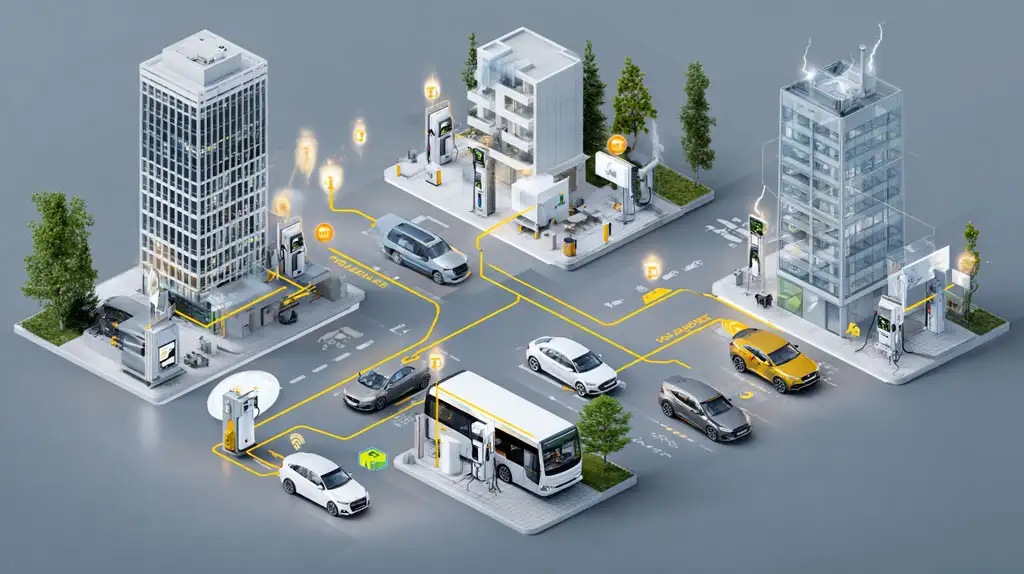
To enable Plug & Charge, existing charging infrastructure requires significant upgrades. This includes not only software updates but also potential hardware modifications. These upgrades entail substantial financial investment. Charging Point Operators (CPOs) need to evaluate the Return on Investment (ROI) and develop cost-effective upgrade strategies. For instance, a large charging network might need to invest millions of dollars to fully support ISO 15118. According to a BloombergNEF (BNEF) report, charging infrastructure investment is a critical factor in EV adoption.
Addressing infrastructure upgrade costs requires smart planning and phased implementation. CPOs should prioritize existing charging stations that can be enabled for Plug & Charge through software updates. For stations requiring hardware modifications, modular upgrade solutions can be considered. For example, choosing EV Charging Station Design and Electric Vehicle Supply Equipment (EVSE) that support future upgrades.
The electric vehicle charging ecosystem involves multiple stakeholders: electric vehicle manufacturers (OEMs), charging point operators (CPOs), mobile operators (MOs), utility companies, and software vendors. These participants lack a unified collaboration framework and business model. This fragmentation hinders the widespread deployment of Plug & Charge. For example, if there isn’t a clear agreement between car manufacturers and charging networks, the user experience can suffer. CharIN (Charging Interface Initiative) is an organization dedicated to promoting global charging standardization, but more collaboration is still needed.
Solving the problem of market fragmentation requires the active cooperation of all stakeholders. Establishing cross-industry alliances and shared platforms can facilitate information exchange and common development. For instance, organizations like CharIN are actively promoting cooperation within the industry.
Plug & Charge involves a significant amount of user data and payment information. This makes regulatory compliance a critical challenge. Different countries and regions have varying data privacy (such as GDPR) and payment security regulations. Ensuring the system complies with all relevant regulations is crucial for global deployment. For example, Europe’s GDPR imposes strict requirements on the collection, storage, and processing of personal data. The U.S. Department of Energy has also issued guidelines on electric vehicle charging infrastructure.
Adhering to evolving regulations is key to Plug & Charge deployment. Businesses need to closely monitor legal requirements related to data privacy, payment security, and energy management. For instance, when deploying in Europe, strict adherence to GDPR is mandatory.
The ISO 15118 standard continues to evolve. The ISO 15118-20 version introduces core advanced functionalities such as Bidirectional Charging and Wireless Power Transfer (WPT). This technological evolution is strongly endorsed by the U.S. Department of Energy (DOE) V2X initiatives and official CharIN white papers. By overcoming technical and compliance hurdles, PnC solidifies its position as the core cornerstone for grid flexibility and V2G energy management, transforming EVs into mobile energy storage units within the future smart grid. In the future, EV Charging Standards will continue to evolve to adapt to changing technologies and market demands. For example, the Department of Energy is actively promoting the modernization of charging infrastructure.
To fully popularize EV Plug & Charge, the industry must overcome complex technical, security, operational, and regulatory challenges. By adhering to standardization, building robust cybersecurity architectures, adopting cost-effective upgrade strategies, fostering ecosystem collaboration, and strictly complying with regulations, we can collectively drive the implementation of this revolutionary technology.
Plug & Charge not only significantly enhances user experience but also serves as the core cornerstone of a smart, interconnected EV ecosystem. Only by bravely embracing and effectively addressing these challenges can we truly unlock the future of EV charging,What has been your experience with EV plug and charge with iso 15118 challenges? What are the main pain points you have identified? Talk to our experts!
Authoritative Source
International Energy Agency (IEA) – Global EV Outlook 2024
European Union Agency for Cybersecurity (ENISA) – Cybersecurity of Smart Charging of Electric Vehicles
CharIN e.V. – Charging Interface Initiative
BloombergNEF (BNEF) – Electric Vehicle Outlook
U.S. Department of Energy – Electric Vehicle Charging Infrastructure
ISO – ISO 15118-20:2022 Road vehicles — Vehicle to grid communication interface — Part 20: Application protocol for AC and DC charging
National Institute of Standards and Technology (NIST) – Introduction to Public Key Technology and Federal PKI
PwC – Electric Vehicle Charging Infrastructure: Ready for the Future?
S&P Global Mobility – The Future of EV Charging: Plug & Charge
European Commission – Data protection in the EU
From initial consultation to seamless installation, our expert team delivers custom EV charging solutions tailored to your business needs.
We will send detailed technical info and quotation to you!