What is the Lifespan of an EV Charger?While the industry standard for an EV charger (EVSE) lifespan is about 10 years, this is just the baseline. With the right maintenance and installation strategy, many owners extend this beyond 15 years, saving thousands in replacement costs. Conversely, neglecting key factors can cut this life in half. This guide reveals exactly how to protect your investment in 7 actionable steps.
| Charger Type | Voltage | Typical Use Case | Average Lifespan | Key Considerations |
|---|---|---|---|---|
| Level 1 | 120V | Home (Standard Outlet), Emergency | 10+ Years | Simple Electronics, Low Stress, But Very Slow Charging |
| Level 2 | 240V | Home, Workplace, Public Parking | 5-10 Years | The Most Common Type. Lifespan Is Highly Variable Based On Quality And Use |
| DC Fast Charger (DCFC) | 480V+ | Public Highway Corridors, Fleets | 7-10+ Years | Highly Complex, Requires Professional Maintenance. Key Components May Have Shorter Lifespans |
Why does one charger last 5 years while another lasts 12? The answer lies in these seven critical factors.
Never buy cheap, uncertified chargers. They often use low-quality parts that can overheat or catch fire.
What to look for:
Check the Label: Look for the UL or ETL mark on the box or the device.
What it means: These marks prove that safety experts tested the unit.
The Rule: No mark? Do not buy it. It is not worth the risk.
Your EV charger is a sophisticated piece of electronics, not just a glorified extension cord. Exposing it to direct scorching sun or constant freezing rain can speed up component aging by 3x. Think of location as the cheapest insurance policy you can buy.
Follow these 3 rules to protect your hardware:
Rule 1: The “Shade” Strategy. Garage is Gold. Installing indoors is always best. If you must install outdoors, choose a North-facing wall to avoid the intense afternoon sun. If that’s not possible, install a simple protective canopy or shield.
Why? Direct sunlight cooks the internal electronics. This triggers “thermal derating,” causing your charger to slow down to protect itself. Keep it cool, and it will charge faster.
Rule 2: Decode the “NEMA” Rating. Before you buy, check the NEMA rating on the spec sheet. It tells you how tough the shell is:
NEMA 4 (Best for Outdoors): This is the “heavy-duty” choice. It’s fully sealed against rain, snow, and—crucially—dust and dirt. It can even handle being sprayed by a hose.
NEMA 3R (Standard): Think of this as wearing a rain jacket but no pants. It protects against falling rain and ice, but it’s not airtight against dust or windblown snow. For harsh climates, upgrade to NEMA 4.
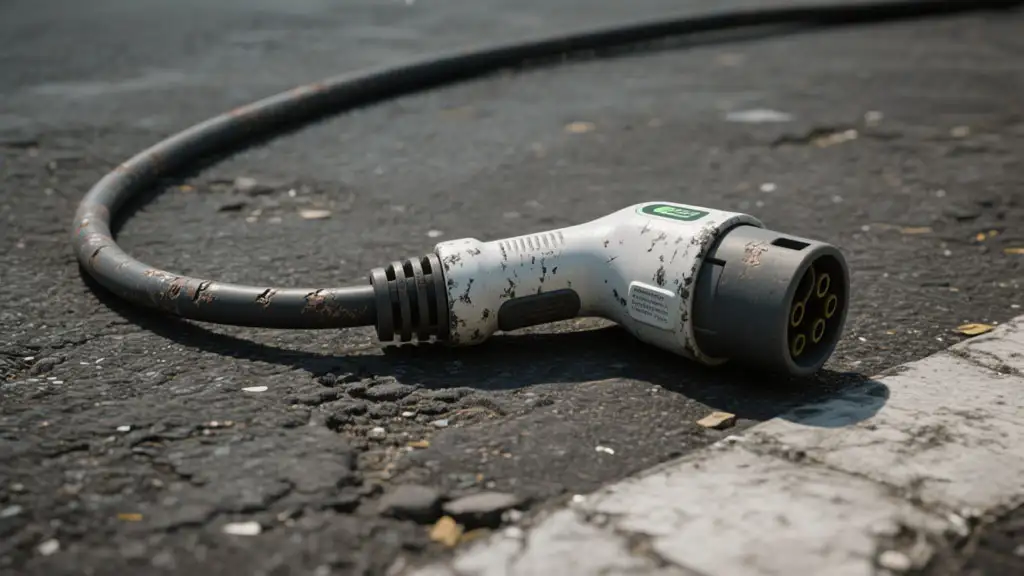
Rule 3: Protect the Cable. Extreme cold makes cables stiff and brittle; saltwater air corrodes metal contacts. Never leave the cable lying in a puddle or snowbank. Always loop it properly on the holster after use to prevent the insulation from cracking.
Think of your charger like your smartphone: heat is the enemy of its battery and processor. Running your charger at maximum power for hours is like forcing it to sprint a marathon—it generates significant heat that degrades internal components over time.
Don’t just plug it in and walk away. Use these “Smart” habits to keep your device cool and extend its life:
Dial Down the Amps (When You Can): If you have all night (8-10 hours) to charge, you don’t need to blast your battery with maximum power (e.g., 48A). Go into your app and lower the charging current to 32A or 24A. Running at 80% capacity significantly reduces heat generation, putting far less stress on the internal wiring and relays.
Schedule for the Coolest Hours: Use the “Scheduled Charging” feature to start charging late at night. The cooler ambient temperature helps the charger dissipate heat more efficiently. Plus, you’ll likely save money on off-peak electricity rates.
For Businesses: Load Balancing: If you manage a fleet, use dynamic load balancing to prevent all units from running at 100% capacity simultaneously during the hottest part of the day.
4. Hire a Pro. Do Not DIY. Bad installation is the #1 killer of chargers. It also starts house fires. Do not install this yourself.
Why you need an electrician:
Correct Wire Size: If the wire is too thin, it gets hot and melts.
Tight Connections: Loose screws cause sparks and electrical arcs.
Proper Grounding: Without this, the safety features won’t work. Pay a professional once. It saves you from replacing the charger (or your house) later.
Lightning strikes and power grid spikes happen. They can fry your charger’s circuit board in one second.
The Fix:
Install an SPD: Ask your electrician to add a Surge Protection Device to your panel.
Cheap Insurance: An SPD costs very little. A new charger costs a lot.
Don’t Risk It: Protect the computer board inside your charger from sudden voltage jumps.
Your charger is like your phone. It needs software updates to run smoothly. Old software causes bugs and slow charging.
What to do:
Buy Smart: Choose a brand with Over-the-Air (OTA) updates.
Stay Connected: Keep the charger connected to your home Wi-Fi.
The Benefit: Updates fix bugs automatically. You don’t need a repair technician to come to your house.
The cable breaks first because you touch it every day.
Don’t Drop the Plug: The head is plastic. Dropping it cracks the seal and lets water in.
Don’t Twist the Cord: Loop it loosely on the holder. Tight loops break the copper wires inside.
Hang It Up: Never leave the cable on the floor. You will run over it eventually. Always hang it back up.
For most homeowners, an EV charger is a significant purchase. You expect it to work flawlessly for years. Here’s how to make that happen.
When shopping, look beyond the price tag. Focus on:
| Task | Frequency | Why It’s Important |
|---|---|---|
| Visual Inspection | Monthly | Check cable for cracks or frays. Check the connector for bent pins or debris. |
| Keep It Clean | Quarterly | Wipe down the unit and cable with a damp cloth to remove dust and grime. |
| Check Connections | Annually | Ensure the charger is still securely mounted to the wall. |
| Test GFCI | Monthly | Press the “Test” button on the plug (if applicable) to ensure the safety circuit works. |
For a business, a charger is a revenue-generating asset or a critical piece of operational equipment. Uptime is everything.
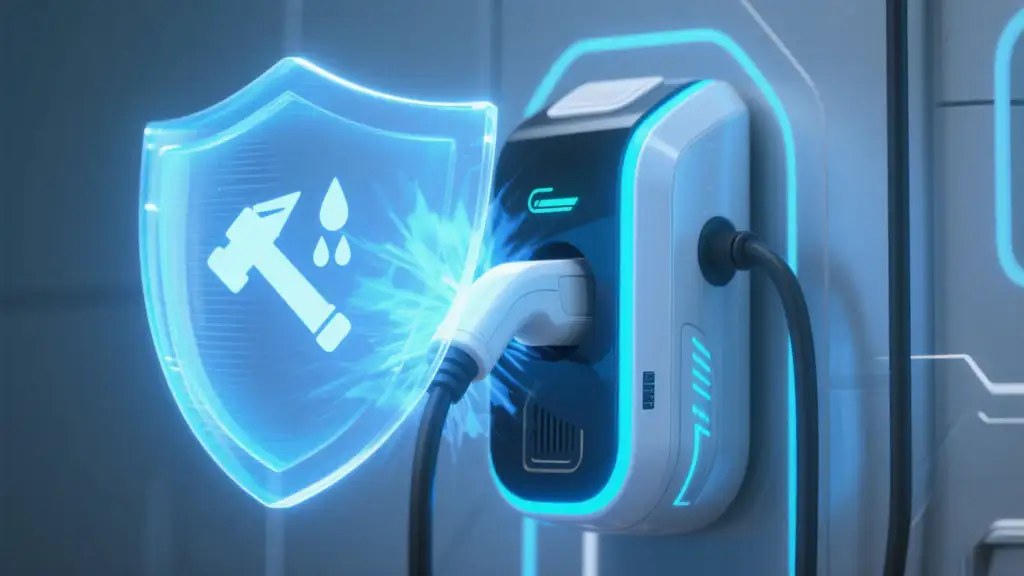
If your charger is installed in a public spot or a busy driveway, it’s constantly at risk—from stray shopping carts, clumsy drivers, or just accidental bumps.
To ensure your hardware survives the next decade, ignore the fancy marketing words and check these three “toughness” specs:
Metal Over Plastic. Budget chargers often use plastic casings. They look fine on day one, but after years of sun exposure, plastic gets brittle and cracks easily. Expert Tip: Look for enclosures made of Aluminum or Galvanized Steel. Think of metal as a heavy-duty shield for the computer chips inside. Plus, metal releases heat much faster than plastic, keeping the electronics cool and happy.
Look for “IK10” (The Impact Score). You might know about waterproof ratings, but for durability, you need to check the IK Rating (Impact Protection). This number tells you how hard you can hit the charger before it breaks.
IK08: Good for home garages; can survive a dropped tool or an elbow bump.
IK10 (Highly Recommended): This is the gold standard. It means the unit is vandalism-proof and can withstand the impact of a 10-pound steel ball dropped right on it. If you want it to last, get IK10.
Feel the Cable Quality. A durable charger needs a durable cable. Commercial-grade cables feel thick and heavy. They use toughened rubber or TPU jacketing that resists cuts and scrapes, ensuring safety even if (accidentally) driven over.
A service and maintenance agreement is essential for commercial chargers. According to a report from BloombergNEF, charger reliability is a major concern for EV adoption, and proactive maintenance is the key solution. This plan should include:
Regular physical inspections by qualified technicians.
Remote monitoring to track usage and detect errors in real-time.
Firmware updates to keep the system secure and efficient.
Guaranteed response times for repairs to minimize downtime.
For operations in colder climates, investing in Extreme Cold EV Charging Solutions like heated cables or insulated enclosures can prevent weather-related failures and ensure consistent service.
Even the best chargers can fail. Watch for these common warning signs.
Charging Faults: The charger or your vehicle frequently reports a charging error.
Reduced Speed: A Level 2 charge that used to take 6 hours now takes 9.
Overheating: The charger unit or plug handle becomes unusually hot to the touch.
Unusual Noises: A loud humming or clicking sound during operation.
Physical Damage: Cracks in the casing, exposed wires, or a broken connector latch.
Tripped Breakers: The charger repeatedly trips the circuit breaker.
If you notice these signs, first try basic troubleshooting: reboot the charger (by flipping the circuit breaker off and on) and inspect for visible damage. If the problem persists, stop using the unit and contact a qualified electrician or the manufacturer’s support line.
At Linkpower, our engineers don’t just build chargers; we build durable assets.
Here is why we are confident enough to promise longevity:
🛡️ IK10 “Vandal-Proof” Armor This is the highest impact rating in the industry. It means our casing can withstand the direct impact of a 5kg steel ball or accidental collisions. Your internal electronics stay safe, no matter what hits the outside.
☔ IP65 All-Weather Protection We go beyond basic rainproofing. Our fully sealed design withstands heavy downpours and completely blocks out fine dust. From sandstorms to hurricanes, it keeps running.
✅ 3-Year “Peace of Mind” Warranty The industry standard is often just 1 year. We triple that to 3 years. This isn’t just a promise; it’s proof of our confidence in our build quality.
Ready for a charger you can trust? Stop worrying about maintenance. [contact our specialists] to secure your energy future.
Question: What is the average lifespan of an EV charger?
Answer: Generally, an EV charger lasts about 10 years. However, this varies by type and usage. A simple Level 1 charger can last 10+ years, while widely used Level 2 home chargers typically last 5 to 10 years. Public DC Fast Chargers, subject to heavy usage and high voltage, may need major maintenance or replacement after 7 years.
Question: How often should you replace your EV charger?
Answer: You typically don’t need to replace an EV charger until it fails, usually around the 10-year mark. However, consider replacing it sooner if you notice frayed cables, inconsistent charging speeds, or if the unit is no longer compatible with newer EV safety features or smart charging apps.
Question: Do EV chargers need maintenance to last longer?
Answer: Yes, minimal maintenance significantly extends lifespan. For home chargers, periodically inspect the cable for cracks (physical wear is the #1 cause of failure) and keep the connector clean from dust. For outdoor units, ensure the casing remains water-tight. Protecting the unit from extreme direct sunlight can also prevent internal electronics from overheating.
Authoritative Sources
U.S. Department of Energy, Alternative Fuels Data Center – “Developing Infrastructure to Charge Plug-In Electric Vehicles” https://afdc.energy.gov/fuels/electricity_infrastructure.html
UL Standards – “UL 2594: Standard for Electric Vehicle Supply Equipment” https://www.ul.com/standards/ul-2594
National Fire Protection Association – “NFPA 70, National Electrical Code®” https://www.nfpa.org/codes-and-standards/all-codes-and-standards/list-of-codes-and-standards/detail?code=70
Idaho National Laboratory – “Real-World Electric Vehicle Charging Data” https://www.inl.gov/article/real-world-electric-vehicle-charging-data/
Open Charge Alliance – “About OCPP” https://www.openchargealliance.org/about-us/about-ocpp/
From initial consultation to seamless installation, our expert team delivers custom EV charging solutions tailored to your business needs.
We will send detailed technical info and quotation to you!