The world is plugging in. The electric vehicle revolution isn’t coming; it’s here. The International Energy Agency (IEA) reports that EV sales continue to break records, with millions of new electric cars, trucks, and buses hitting the roads each year. But this electric boom creates a massive challenge: we need a charging infrastructure that is powerful, scalable, and smart.
If you are a fleet manager, a property developer, or a charging network operator, you’ve likely faced the challenges of limited space, high installation costs, and planning for an uncertain future. How do you build for the demand of tomorrow without overspending today?
This guide will answer that question. We will explore the future of EV charging and show you why a Separated DC Charger architecture is the smartest investment for your high-power charging needs. We will cover what it is, how it outperforms traditional systems, and where it is being deployed to build the backbone of our electric future.
Table of Contents
What Exactly is a Split Type DC Charger?
Let’s make this simple. Think of a split air conditioning unit in a home. You have a quiet indoor unit that delivers the cool air and a separate, larger outdoor unit that does all the heavy lifting.
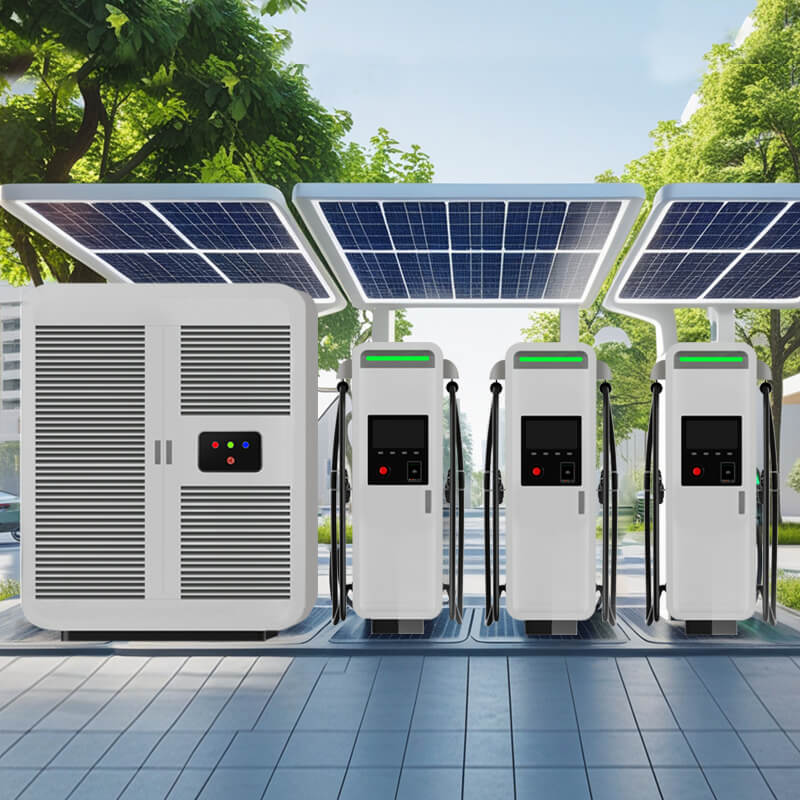
A Split System DC Fast Charger works on the exact same principle. Instead of one massive, all-in-one charging station at the parking spot, the system is divided into two key parts:
1.The Power Cabinet:
This is the high-voltage core of the system. The cabinet consolidates the heavy and heat-generating components—primarily AC-to-DC rectifiers, power factor correction (PFC) modules, and advanced cooling systems (liquid or forced-air). It is the core of the Centralized Charging System, typically designed for an IP55 or IP56 rating and placed in a dedicated utility area up to 200 meters from the dispensers, mitigating noise and thermal impact. The cabinet is often modular (e.g., 60kW increments) for scalability.
2.The Dispenser (or Satellite Post):
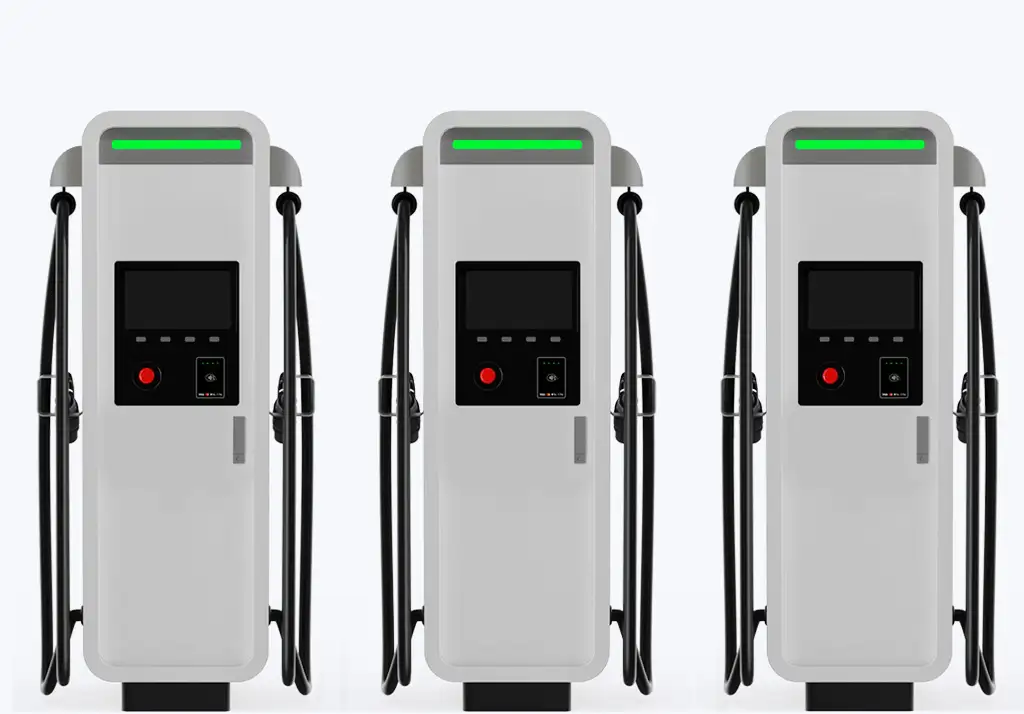
This is the sleek, user-facing part of the system. The DC Charger Dispenser is what the driver interacts with. It’s essentially a lightweight terminal with a screen, card reader, and charging cable. Multiple dispensers can connect to a single power cabinet. This is often called a Power Unit with Charging Satellite Post design.
This clever separation is the key. By moving the bulky hardware away from the vehicle, the Split Core Dc Charger offers incredible flexibility and power.
Split Type vs. All-in-One Chargers: A Head-to-Head Comparison
To truly understand the benefits, let’s compare a Power Cabinet with Charging Dispenser to a traditional all-in-one DC fast charger. For mobile users, each row can be viewed as a separate comparison card.
Comparison of DC chargers
Function
Shared Type DC Charger
All-In-One DC Charger
Footprints At Parking Lot
Ultra-minimal (typically 30cm* 30cm base). Dispenser is lightweight and saves up to 80% of the footprint of an all-in-one unit at the parking space.
Big and bulky. The whole unit sits in the parking lot and takes up a lot of space.
Voltage Range/Compatibility
Excellent. Centralized power supports wide-band architectures (200V to 1000V DC), natively supporting both standard 400V and future 800V EVs.
Limited. To add more charging points, you have to buy and install a whole new, bulky unit each time.
Installation and Site Design
Very flexible. The power cabinets can be placed several hundred meters apart, allowing for creative and optimized layouts.
Rigid. The charger must be placed directly at the parking space, which limits design possibilities.
Maintenance & Uptime
Easier and faster. Technicians can service the centralized electrical cabinet without blocking parking spaces.
Disturbing. Maintenance requires the entire charging station to be taken out of service and the work to be carried out in an area with high traffic.
Total Cost of Ownership (TCO)
Lower. TCO modeling shows that for sites requiring ≥4 charging ports with shared power, the CapEx per port is reduced by 15% to 25% due to the sharing of one major power conversion unit.
Centralized. Heat and noise are confined to the electrical cabinet, away from the user, creating a better experience.
Localized. Heat and noise are generated directly at the parking lot, which affects the user environment.
The 7 Key Advantages of a Separated Architecture
The comparison table makes it clear, but let’s dive deeper into the powerful benefits driving the adoption of this technology.
1. Unmatched Scalability & Future-Proofing
This is perhaps the most significant advantage. With a Modular DC Fast Charger, you can future-proof your investment. You can install a power cabinet with, for example, 360kW of power today but only connect four dispensers. As your needs grow, you can add more dispensers without touching the core infrastructure. Furthermore, the power itself is modular. You can often add 60kW power modules to your cabinet, scaling up to 720kW or more over time.
2. Optimized Footprint & Site Design
Real estate is expensive, especially in urban areas. A Split Type DC EV Charging Station frees up valuable space. The slim profile of the dispensers allows for more parking spots, better traffic flow, and a cleaner, more modern aesthetic. This flexibility is a game-changer for retail locations, parking garages, and compact fleet depots.
3. Simplified Maintenance & Increased Uptime
When a traditional charger fails, the entire spot is out of service. With a split system, issues are often contained within the centralized power cabinet. A technician can work on the power modules while other chargers on the same cabinet remain operational. This leads to higher uptime and a better customer experience.
4. Superior Heat Dissipation & Performance
A High Power DC Charger generates significant heat. By consolidating the power electronics into a large, well-ventilated cabinet, heat management becomes far more efficient. Better cooling means better performance, longer component life, and more reliable charging speeds, even on hot days.
5. Lower Total Cost of Ownership (TCO) for Large Deployments
While a single split charger setup might have a similar cost to one all-in-one unit, the economics shift dramatically as you scale. For any Centralized Charging System with multiple charging points, the split architecture reduces the cost per spot, lowers installation complexity, and minimizes long-term maintenance expenses.
6. Enhanced Safety & User Experience
With the high-voltage power conversion happening far away from the user, the interaction at the dispenser is inherently safer. The dispensers are also quieter and produce less heat, creating a more pleasant and comfortable experience for the EV driver.
7. Extreme Flexibility
The Modular EV Charger design gives you complete control. You can mix and match dispenser types, offer different power levels at different spots, and design a truly custom charging solution tailored to your site’s specific needs.
Ideal Applications: Where Do Split Chargers Shine?
The unique benefits of this technology make it the perfect choice for high-demand, large-scale charging scenarios.
EV Fleet Charging Solutions
This is the number one application. A DC Fast Charger for Fleets needs to be reliable, scalable, and cost-effective. A split system allows a fleet operator to build a central power hub (the Split Charging Stack) and distribute power efficiently across their entire depot. It supports smart charging schedules to optimize electricity costs and ensures the entire fleet is ready to go every morning.
Public EV Charging Infrastructure
For highway rest stops, gas stations, and retail centers looking to install a large bank of chargers, the Split Type DC Fast Charger is ideal. It maximizes the number of available spots in a limited area and provides the high power (350kW+) that drivers on a journey demand.
High-Density Urban Charging Hubs
As cities move towards electrification, dedicated charging hubs will become common. Split systems allow these hubs to be built efficiently in multi-story parking garages or tight urban lots, where space is the ultimate luxury.
How to Choose the Right Split Type Charger for Your Project
When selecting a system, look beyond the marketing. A thorough procurement process requires confirming these specific engineering and performance parameters:
1. Maximum Power Density and Modularity (kW): Confirm the total capacity and granularity of scaling. Systems should scale from 180kW up to 720kW or more, using ≤60kW hot-swappable power modules for maximum flexibility and minimal downtime.
2. Dispenser-to-Cabinet Ratio & Distance: What is the maximum number of dispensers (e.g., 4,8, or 12) a single cabinet supports, and what is the maximum distance (up to 200m using power cables) between the cabinet and the furthest dispenser? This defines site flexibility.
3. Charging Efficiency (Cost Control): Look for a guaranteed minimum peak efficiency of >96.5% across the entire operating voltage range to minimize electricity loss.
4. Safety and Environmental Rating: The Power Cabinet must have an enclosure rating of at least IP55 for dust/water ingress, and the Dispenser should be rated IP54 or higher, with built-in overvoltage and short-circuit protection conforming to IEC standards.
The Smart Choice for a High-Power Future
The transition to electric vehicles is a marathon, not a sprint. Building a successful charging infrastructure requires foresight, flexibility, and a focus on long-term value.
The Split Type DC Charger is not just another piece of hardware; it’s a strategic platform. It addresses the core challenges of space, scalability, and cost that have held back large-scale charging deployments. By separating the power from the user, it provides a more efficient, reliable, and user-friendly experience.
Case Study Insight: The TCO Advantage at Phoenix Transit Depot (Arizona, USA). In Q4 2024, the Phoenix City Transit Authority (PCTA) upgraded its central maintenance depot, transitioning 12 charging points (total 720kW capacity) from aging all-in-one units to a new split-type system powered by two centralized power cabinets. Project Manager, Mr. Alex Chen, reported a 20% reduction in initial trenching and cable routing costs compared to the original distribution plan, due to the consolidation of heavy electrical infrastructure. Furthermore, during the first six months of operation, the maintenance team observed an estimated 18% lower Mean Time To Repair (MTTR), as technicians could service power modules without blocking the critical bus parking spots. The Split Type DC Charger is therefore more than just hardware; it is a strategic platform that delivers measurable operational efficiency…
Ready to Build Your Future-Proof Charging Infrastructure? The future of charging is modular, scalable, and powerful. Contact our team of charging experts today. We can help you design a custom split-type charging system tailored to your specific site and budget, ensuring you’re ready for the electric future.
Authoritative Sources
International Energy Agency (IEA) – Global EV Outlook: For data on the global electric vehicle market and charging infrastructure needs.
CharIN e.V. (Charging Interface Initiative): The official body for the Combined Charging System (CCS) standard. A great resource for technical specifications.